
Episode 20
Mel Noakes
Head of Sponsorship and Events at Santander
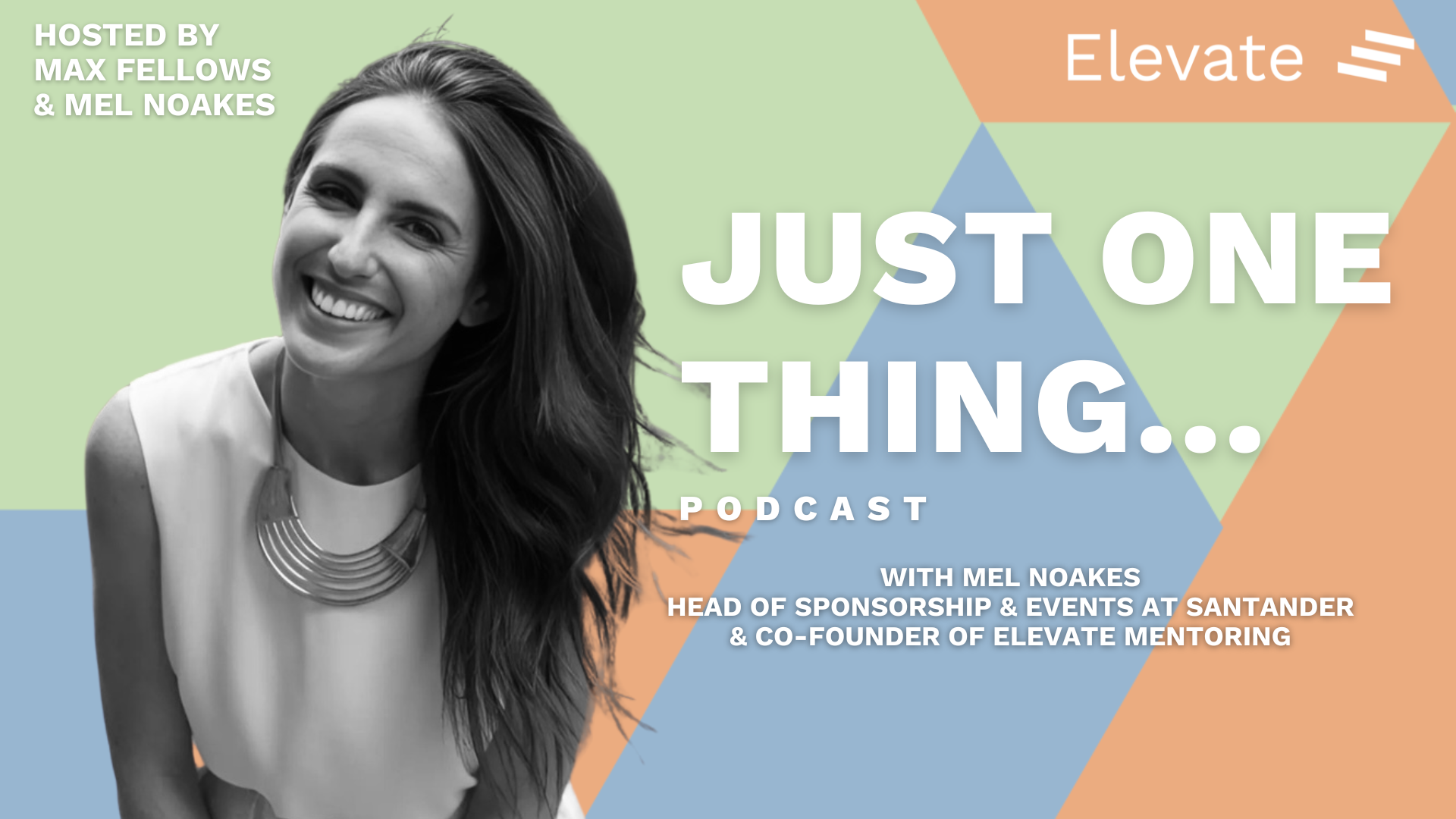
ON THIS EPISODE OF ‘JUST ONE THING’:
Our guest on this episode is my friend Mel Noakes, Head of Sponsorship and Events at Santander, and co-founder, with me, of the event industry’s largest mentoring and training provider, Elevate.
Mel has worked both agency and client side and has spent the last 20 years creating world-class brand experiences and sponsorship activations globally for Santander, Sony Ericsson and Sony Mobile, Shell, L'Oreal, Budweiser, Jack Daniels, and Disney to name just a few. She’s also been lucky enough to work on some of the most iconic sponsorship properties including Ferrari, Formula 1, Williams Racing, UEFA Champions League, the World Cup, and Santander cycles. She’s passionate about our industry and is a sought after speaker and guest lecturer at universities.
She’s also a successful coach and a published author.
She says, get comfortable with being uncomfortable because that’s where the magic happens.
Watch Mel on YouTube or listen to her on Spotify or Apple podcasts



-
Dear Mel aged 20 (2001)
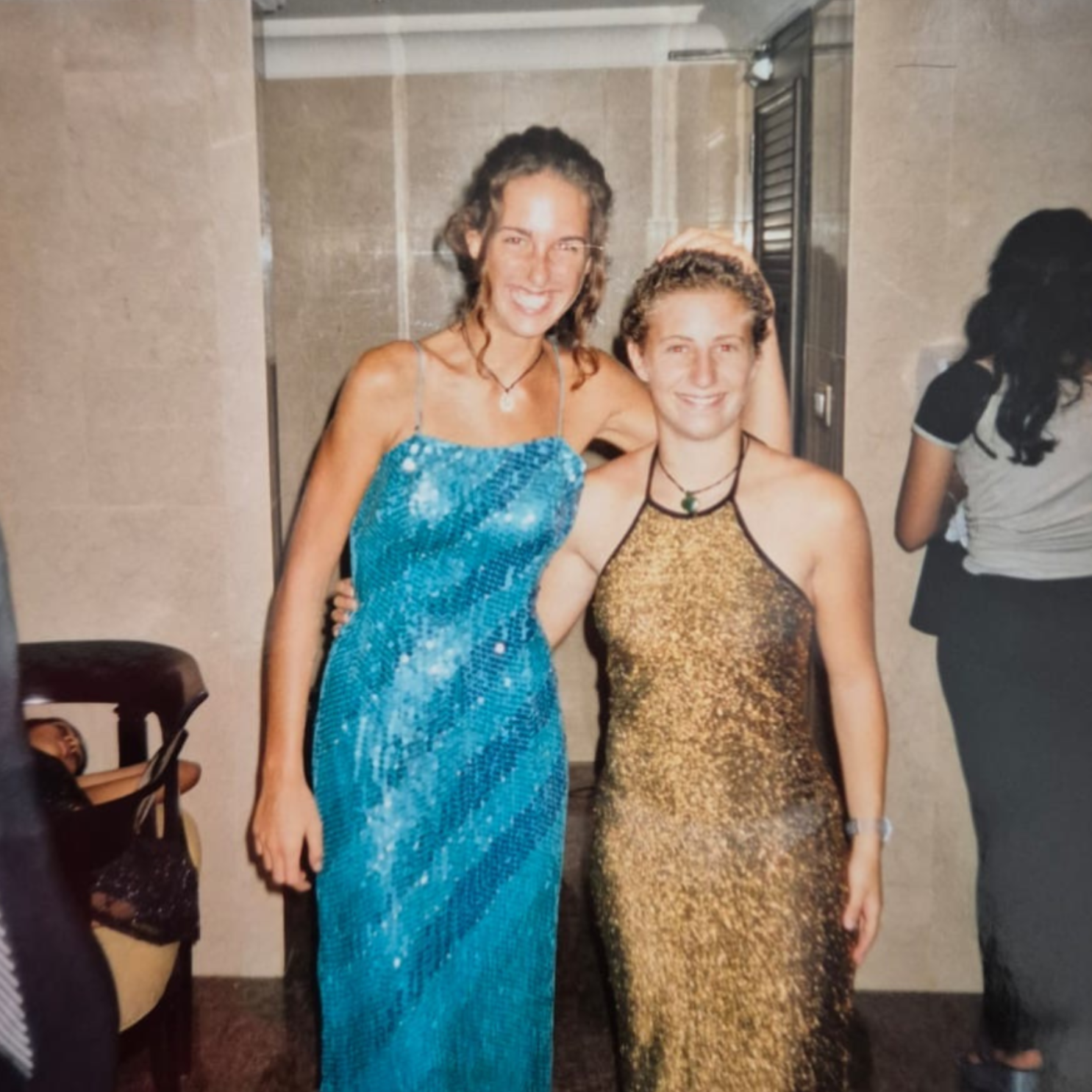
Where do I even begin? Sitting in Goa it’s hard to imagine the unexpected twists and turns life has in store for you. Your sense of adventure has led you to India on a gap year with your best friend. As cliche as it sounds, this trip has been about finding yourself, and you have. Travel will continue to be a huge part of your life, but it will evolve. You will get to South America (and it will be worth the wait!) and the Balearics will feature heavily, but you’ll also be fortunate to travel for work. You'll trade backpacking trips for different kinds of adventures and you'll constantly be reminded that the most meaningful travel is about creating memories to last a lifetime.
You already know that life isn’t all sunshine and rainbows. The loss of your Dad at 18 months, the impact of being bullied at school and the mental health battle you’re still finding your way through - all of it will come to shape you. These experiences also sit behind your drive to never say “what if”, as you inherently understand the value of life. This plays out in your personal life, as well as your career.
And speaking of careers, you'll find yourself unexpectedly drawn into the world of events. You'll discover a passion for bringing people together and for crafting experiences that are both memorable and meaningful. You'll learn that success in events isn't just about the logistics, it's about understanding the human element, about creating an atmosphere where people feel seen, heard, and valued and creating moments and memories that matter.
You’ll be lucky enough to work for three exceptional businesses - an agency called iris, Sony Ericsson / Sony Mobile and Santander. All three have similar qualities - they’re entrepreneurial, brave, creative and, crucially, have some of the most talented people within them who become more than colleagues, they become family. So no, you won’t be the dog-walker the career coach at school told you you’d be. The experiences you’re lucky to create will take you from Japan to the USA, from James Bond to Ant & Dec, from trade shows to festivals and so much in between - and you’ll love all of it.
You'll face challenges that will test you and your resilience, and you'll learn that stepping outside your comfort zone is often the key to unlocking new opportunities and your personal growth. Whether it's taking on a secondment you aren’t sure is right for you, public speaking, starting a business, leading a team or saying yes to a surprise call from a client that changes the course of your life forever. Embrace these challenges and moments of opportunity, they’ll make you stronger and lead you to places you can’t imagine sitting on the beach in Goa right now.
You'll also learn the invaluable lessons of leadership. You'll discover that leading a team isn't about giving orders, standing on a stage, or being bestowed the title of “leader”, it's about empowering others to succeed and creating an environment for them to succeed in. You'll learn from some of the best leaders, as well as the people you line manage. They’ll teach you as much about life as they do about leadership. These lessons are a gift - never take it for granted.
There’s a few things you should know from your future self:
Practice self-compassion: There will be times you lose sight of this, working too many hours and putting too much pressure on yourself and your body in your quest for perfection – please remember that “done is better than perfect”. Be kind to yourself, especially during difficult times. Forgive your mistakes, celebrate your successes, and remember that you are enough, always (you’ll write a book on all this one day!)
Never stop learning: The world is constantly evolving, and so should you. Embrace lifelong learning, whether it's through work, books, travel, podcasts (you’ll find out what these things are!) or simply observing the people around you.
Build your resilience: You're going to face some incredible challenges and life will test you in ways you never imagined. But you will discover an inner strength you never knew you possessed. Sometimes resilience isn't about bouncing back, it's about finding a new normal.
Give back: Find ways to contribute to something bigger than yourself. Volunteer your time, support causes you believe in, and make a positive impact on the world. Remember, if you’re lucky enough to do well, you have a responsibility to send the elevator back down and you’ll go on to co-create a truly remarkable “elevator”.
Find your tribe: Learn the true meaning of family. Not just the one you're born into, but the one you choose. The friends who become your siblings, the colleagues who become family, and the partner who becomes your rock. Cherish these bonds, nurture them, and never underestimate their power.
Define your own version of success: It’s easy to compare yourself to others and feel you’ve come out short or be swayed by what other people think success is. Be brave enough to define what success looks like for you, even if it seems crazy to others, and stay true to that.
And finally and maybe most importantly,
Embrace the unexpected: Life rarely follows the script we write for it. Get comfortable with being uncomfortable. Be open to detours, embrace the unknown, and trust that even the most challenging experiences can lead to incredible growth (and they usually do). Remember, rainbows need sunshine and rain to form and distance to appreciate them.
Please remember to cherish the present moment. Time flies by faster than you can imagine. Savour the small joys, celebrate the milestones, and never lose sight of what truly matters. So, 20 year old Mel, be brave, be curious and believe in yourself. You’re in for an incredible ride and some truly magical surprises.
With love and unwavering belief in you,
Your future self, Mel (2025)
-
Max: Our guest on this episode is my very good friend, Mel Noakes, head of sponsorship at events at Santander and co-founder with me of the event industry's largest mentoring and training provider, Elevate. Mel has worked both agency and client side and has spent the last 20 years creating world-class brand experiences and sponsorship activations globally for Santander, Sony, Ericsson, Sony mobile, Shell, Jack Daniels and Disney, to name just a few. She's also been lucky enough to work on some of the most iconic sponsorship properties, including Ferrari, Formula One, Williams racing, UEFA Champions League and the World Cup, not forgetting Santander cycles. She's passionate about our industry and is sought after speaker and guest lecturer at universities. She's also a successful coach and published author. Mel says, Get comfortable with being uncomfortable, because that's where the magic happens. I'm fortunate to know Mel very well. So I can tell you first hand, she's unbelievably hard working, fierce, resilient and determined and I'm so pleased to be able to call her my very good friend.
Max: Welcome to your own sofa and stage and podcast, Mel.
Mel: Thank you so much for having me.
Max: Welcome to the Elevate sofa. And how does it feel sat on the other side of things?
Mel: I'm not gonna lie, a little bit unusual. I'm slightly nervous about the fact that I have no control over the questions today, but I'm also really excited to be here with you.
Max: Good. That nervousness should be there because you have no idea what I'm going to ask or what or what's coming.I have an ambition today, which is to help people understand and see the real you. You have and do a lot, both in terms of publicly, with the events world, behind the scenes, at home and things like that. And I want people to be able to see the real Mel, because I've had the pleasure of knowing you for the past 15 or so years. I think it's pretty much that long,having tried to sell you some form of event or exhibition stand, I think, at the time. In that process, I suppose, just want to kind of say, I feel very blessed and lucky to have you in my life, both from a commercial perspective, as well as Peter Kerwood on the Elevate side as well. But you are and you mentioned in your letter the resilience and the determination.You are someone who I feel very fortunate to have in my life. I owe you a lot. You are brilliant and someone I care about greatly and so I want to say thank you for myself from the team, Elevate as well. And if I get you to cry, it's five quid. But in all sincerity, where we've talked about this letter and we've talked about it to a fair extent, I find myself kind of almost enjoying the process more, because you get to kind of know you more and hear about you more and things. So that being said to the starting point, I'm now going to go in and then hopefully open up so everyone else can find out about you. And where I want to start is that 20 year old, kind of, fun loving individual sat on a beach in Goa, you mentioned in your letter about this self-discovery and there is the joke of the gap year and everyone going on to find themselves and everything else. What was on the mind of Mel at 20 and you mentioned it worked. What did you find out? What was that journey all about?
Mel: So for me, the journey was an interesting one, actually. So I watched my next door neighbor, Annie, when I was younger, practice putting up tents for Glastonbury and going off on travels. And then her younger sister, Leonine, Lenny,as I call her, went off and did the same. So I had a real seed of, I want to go and explore the world and I want to see the world. No one in my family had really done that and I think it was only really in the 80s, probably 90s, where travel opens up and it was more normal, I guess, for people to want to go and do these gap years. And so I had this seed planted. When it came to my final years in senior school, I went into STA travel, which is my favorite brand. If, oh my god, I love that brand and if it was still here, that's where I'd work if I wasn't doing what I'm doing. And I just had this real sense of, I want to understand what's out there. I want to see the world. And I'd gone into STA travel and plan the trip alone. So my best friend, Danielle, she wasn't due to come on the trip. It was something I wanted to do. I went in, booked it, designed the route, got really excited, paid for it. And I'd got home and phoned Danny and said to her, I'm doing it. I've booked the trip. This is the route, this is what I'm doing. I think she got really excited, but I know she got really excited. Phoned her mum and said, Mum said, I can come. Can I come with you? And that was how we ended up going together. I think for me, I was really aware of this big world out there and knowing that I wanted to explore and I wanted to have a sense of what was possible and not be limited by I live in this postcode and I have this kind of life and I have this kind of path, I wanted to explore. So, the chance to explore and meet lots of different people, be out of your comfort zone and find connection, really, with lots of different people that were also there exploring and seeing the world for the first time,meeting different cultures, eating different food, not having the safety net of the family and the friends and everything you'd know and almost being able to be any version of yourself that you wanted to be and starting to figure out, well, who am I, when I'm not all of the stories that have been told by my friends and all of the history I could just be me and being really comfortable with that. I mean, we had so much fun on that trip. It's still more than 20 years ago. Now that we started it and we still talk about it, there are still so many great memories. So what was on our minds was just this real sense of adventure and the start of life and real opportunity. I don't think either of us took it for granted that. I mean, I went to work to earn it. There wasn't a trust fund waiting for me to go traveling, because it was something I really wanted.So, it felt like life was starting and it was so exciting
Max: One moment, I suppose, then and that excitement and so that was Mel at 20. And I'm mindful that those that don't know Mel now as well as I do. Can you also introduce yourself in terms of what you're doing now and a bit about you and something that we wouldn't know about you?
Mel: Something you wouldn't know about me?
Max: Okay, go to the corporate side. Yeah, give the real world answer first and then I…
Mel: I don’t have a taekwondo red belt in the corner.
Max: That's fine. So I am passionate about our industry and I've been lucky enough to build amazing experiences for some incredible brands over the last 20 years. As the letter says, I've done everything from festivals to trade shows,worked with some incredible people and I was lucky enough to have agency experience. I started at Iris and then moved into the brand side with Sony Ericsson and I'm now lucky enough to be at Santander. I am fortunate also to work with so many exceptionally talented people. Both the team I lead, there's 11 of them and they're all incredible. But also, I sit alongside the management team, the marketing leadership team and again, surrounded by such talented people. Then, the day-to-day is really varied. No two days the same. My remit covers all of our brand experiences. So that's everything from internal town halls, product launches, building openings, activations, from our sponsorships that we'll do for our colleagues to externally might be exhibitions, trade shows, thought leadership events, intimate events, with our brand ambassadors, hosting at events. But then on the sponsorship side, the chance to work with people like Atlassian Williams Racing, Claire Williams, Jenson Button. We work with Formula One as well and to be part of the Santander cycles properties as well. As a proud Londoner, the chance to see the cycles going around London every day and being part of Milton Keynes and being so intrinsic to those cities is something I'm really proud of. We also have a partnership with Twinkl, which is the world's largest online education platform and we have co-design the financial education program that's now out there supporting five to 16 year olds. We've worked with nearly 3 million people, have downloaded the resources up until now. So, it is absolutely brilliant to be in a role that you are constantly thinking about new things. It's really varied. It's really challenging. The team challenged me always to be better. The kinds of projects you work on are always different. So it's great because we get to be really creative and I get to be really creative. Outside of Santander,obviously the brilliant Elevate with you and Pete, where I get to channel a lot of my love for psychology, personal development and all of the coaching that I've done to bring that into Elevate, to really help people that come on the program, develop their skills as a mentor, ensure that their journey through it is a really successful one and for our mentees, that they get the most out of the program. So, when I'm not doing Elevate or sometimes our work, outside of work, I am a wife, a mum. I absolutely love our industry, so I'm a travelaholic with a slightly less well-traveled version of that now that I'm a mum, but I love going to experiences still. So, all of the brilliant things that come into London that we're so lucky to have in these cities and I'm really enjoying taking Albie around to some of those things and showing him those, something that people won't know about me trying to think about what I want out there in the ether. But the one that you'll know and that probably a lot of people won't know, is that I used to be a dancer as well.
Max: Where?
Mel: This is where it's dangerous when you know. So I used to dance with Miss Moneypenny. So I was able to go and work in Ibiza. I've worked all over the UK. I got the chance to go to work in Russia, got to dance in Moscow. That was amazing and lots of other places as well. So yeah.
Max: I wanted you to clarify, because for one second I didn't want anyone thinking it was anything kind of untoward or otherwise.
Mel: I see that quite a lot through my life, particularly for the older people in my family, where you tell them you're a dancer and you work in nightclubs and the instant reaction is Oh and I have to always qualify what it was.
Max: No, I have, yeah.
Mel: Thank you putting out that.
Max: Some dignitaries there absolutely. What I find amazing and I don't think you kind of almost give yourself credit for as well, because you also have a book out there. You're a published author, as we said and that's very much about self-care, yes and so just leaning into that side to kind of start with really you come across as exceptionally confident and well-rounded passion, it obviously, kind of, oozes out of you as well. But the desire and love for self- care you mentioned in your letter about going through kind of challenges earlier on and wanting to give people a bit of an understanding about that bereavement, bullying and also some other kind of elements we'll talk about later. Where or how has that manifested from there? And I think it's amazing you've turned it but at what point have you turned what arguably would be some kind of quite challenging and quite difficult times into a real positive and helping others.
Mel: So the book is something I'm incredibly proud of actually. The thought of that being out there and having helped and supported so many people, 1000s of people. Actually, 10s of 1000s of people have bought that book, which blows my mind a little bit and I could never have worked with that many people. But how did it turn around? It's not an easy answer to that question, because it has been such a journey through and really it came about later in life. I had done a lot of work and a lot of therapy and I'm sure we'll get onto that in a little bit. But I had gone through a lot of coaching and training and realized that actually what I really wanted to do was help people lean into the power of self-care. And self-care is often seen to be quite wooly and quite fluffy and not very material, for want of a better word, but what I learned through my recovery from eating disorders that self-care was actually a really important practice. It's a daily commitment to look after yourself, to put yourself, if not first, at least, up there alongside the other things that you deem to be important and making a commitment to do the things that cared for yourself so that you could really thrive. I realized how a few people really lent into that and understood what was important. When Penguin approached me to write the book, it was such an opportunity to get that message out there. It's something I've continued to have to practice. You know very well in recent years, I've lost a lot of members of my family, my mum, my dad, my father in law. I've seen friends sadly, bury children.And you realize that life is really difficult and that there are difficult times that come and that practice of self-care is so important because those are the fundamental foundations that will get you through those hard times. So, yeah, it's been a bit of a journey and it's definitely been something that I continually have to practice and remind myself of, because it's so important.
Max: So more than anyone, in terms of that self-reflection, that self-worth and work and the type of things that we're talking about you must do. How did you find the writing the letter to yourself? Because it's a little bit more of a format.And for those listening for the first time, the letter is a mail written to a younger self at 18 to 20 or so and the advice. So what was that process like for you? Then, given what we've just been talking about?
Mel: I really loved it. So I've done exercises like this through my coaching.
Max: Knew you'd be a bloody professional at this.
Mel: But it was interesting, because I've done it from a very personal standpoint previously, which has been all of the things that our guests have said, very cathartic, very therapeutic. So, I was expecting that to be the case. I'd never written a letter with the career focus before, so it was quite an interesting one and I challenged myself to do it from that point of view, although obviously, there's a lot of personal in there too. But the few things that really came up for me were a real sense of gratitude on so many levels, gratitude for all of the people that I've met along the way that have been part of the journey, part of my story, gratitude for the ability to build a career in something that I absolutely love and a life that I absolutely love. I feel so blessed to have a career, a family, the space to create something like Elevate and genuinely give back on such a scale that I don't think I could have imagined it when we started that conversation 10 years ago. Also, a real sense of pride in all of those things because the chance to build so many experiences and deliver so much work that means something to people and create moments that are really important and really matter. Then through Elevate being able to provide a platform for 1000s of people now, we can say, to improve their situation, improve their careers and a real sense of fun. So, I really enjoyed looking back, because over 20 years, I've delivered so many different kinds of events.I've been involved in so many different kinds of projects. I've met so many different people and I could take an entire podcast just naming the people. It really made me smile thinking about the people in the background. So, it was great to almost reminisce and go down memory lane again, because it's not something we're very forward focused in the events industry. So, it was quite nice to take a moment and reflect backwards.
Max: Do you think Mel at 20 would have potentially envisaged or could you have envisaged where you're at now?
Mel: Absolutely not. I knew I'd be okay. I think…
Max: What do you mean by okay, though so?
Mel: I think when I left school, I had always been a really good student. I had really good grades. I was very comfortable with… I'm clever. I can do certain things. I know that I can communicate well. I know neither I am smart. I know that I could tear my hand at a job and I would be okay. So, I left school with this sense of, I don't know, what I'm going to do,but it's going to be okay. And it's actually quite sad. Now I go into a lot of schools and lecture, or I go back to my old high school sometimes and speak and I think there's a lot of uncertainty for the youth today coming out of schools. I don't think they have that same sense of everything's going to be okay. But when I left school in the 90s and when I left university in the early 2000s, I just had this sense of belief, it's going to be okay and I don't know what I'm going to do, but it's going to be okay and I'll figure it out. I think I always had that sense of, you've got this, in the back of my mind.
Max: Where does that come from?
Mel: I don't know.
Max: Confidence of things, because you're saying about generational you know? And I wonder, was it generally just more people had that belief, or whether it’s you.
Mel: I think the times were just a bit different then. I think there was this sense of possibility. Most people from school went to university, not because everybody was absolutely passionate about learning and it was just what everybody did and then everybody went and got a job and everyone did quite well. I look across my peers from school and everybody has done so well and it's so lovely to see so many of my friends be so successful and doing lots of different types of jobs.And without fail. I don't think there's one person that I look at and go, oh yeah, I could have seen you doing that. Because we've all ended up in such amazing places and remarkable places. When we were at school doing our careers fair, I mentioned it in the letter to the guys that came in to deliver that program. It was very traditional. You could be a lawyer.You could be a doctor. In my case, I got told I'd be a dog walker.
Max: Not far off. I hang on. Love for dogs.
Mel: Set the ambitions high. I do love dogs and I do have dogs. But it was very traditional. So in a sense, a lot of the jobs that we've ended up in my case, events and sponsorship that those weren't jobs that were talked about at school. So, I don't think we really knew what was out there. And what a surprise it was, what a great opportunity to go into something and build a career in things that we love. So I feel really lucky.
Max: What was, I mean, I agree massively and I also don't think much has changed and maybe that's a bit broad brush and pessimistic, but in terms of the awareness of what's out there, the potential job roles and things like that, I personally would love to see and I'm sure AI could do this is that a personality type test and then scan every job on the planet to then say, these are the vocations that actually you would really succeed at, note to self, tool to build. What for you then, in terms of those early years and dog walking, because would be the fallback, perhaps the plan B, what did you aspire to be?What was the things that really you were passionate about at 20 that you wanted to do and did you have an idea of the kind of career that you thought you might have?
Mel: I loved psychology and I loved English and I actually also loved geography. Those were my three big passions.When I went to university, I studied English literature, but I never lost my passion for psychology and geography. But in all honesty, I don't think I really knew what I wanted to be. And I came to be in the events industry, not quite by accident,but it came from I was at university and in the second year of university, it became really evident that the financial burden was too big for my family, too big for me to really stay and so I made the decision to defer a year. I'd had a conversation with my tutors at the time trying to explore different avenues to stay but it just the maths didn't work out. And so I deferred a year saying I'm going to go to London, I'm going to get a job, I will pay off some debt and I will save so that I can come back.
Max: How did that feel?
Mel: It felt really difficult. I felt like I'd really failed, because I'd always done really well at school and university, was almost a given and for me to not complete that. I'm somebody, when I start something, I finish something. It took a lot to make the decision, but in many ways, the decision was very easy because I didn't want the burden on my family. It was really difficult for them. And so I went to London to get a job and just thinking, right, I'm going to do this for a year. I will save, I'll have the money. I mean, I think I was a bit naive to think that I could go and work, save money in London for one and then save enough to see me through a university degree, but that was what I thought. And so I came back to London, signed up for some recruitment agencies and went out and interviewed and I'd just so happens that I got the opportunity to go and interview for Iris. I'm sure we'll talk about that. That was the most entertaining interview I ever had.And got the job and ended up as a receptionist at Iris. And from there, the career developed and I made the decision not to go back to uni and one day I'd love to it's on my sort of Bucket List of finishing the degree. But the career unfolded for me. So to some degree, I think I was so young I hadn't even started to really think about it, found myself in a space that I loved, in a role that I loved, with a great opportunity ahead of me and I followed that path. So, to some degree, I think I hadn't even had the chance to figure it out yet.
Max: You'd say, then, to some extent, by accident.
Mel: Yeah, absolutely, I turned up for a receptionist job.
Max: Tell us about how you fell into the industry, as many, many people kind of fell into all.
Mel: It definitely was a fell in. So, I turned up for the interview at Iris and I remember going to St James, where they were at the time and they were in a really small office, either in the basement on the first floor, I can't quite remember and it was a very nondescript door. I remember standing outside and it was almost a shared workspace environment before shared workspaces were a thing. And I remember pushing the door open, going in for the interview and I think everyone that was there at the time will agree with me. I opened the door and it was chaos behind the door, but an organized chaos and…
Max: An agency type chaos.
Mel: Agency chaos. There was a pool table behind the door. There were desks almost shoved into this space because they had already outgrown it. That was shouting across the room, throwing things across the room. And Ian Milner, one of the co-founders of Iris, actually interviewed me. I remember sitting down with him, going through the interview for a receptionist role. So you had the co-founder interviewing for the receptionist. I left, not really sure what they did, but there was something about that space and the electricity in the room that when I left, I just thought, Gosh, I really want to work here. I really hope that I get this job. By the time I'd gotten the train, got to Tottenham Court Road, I was in Waterstones and got the call that I'd got the job. And I was absolutely elated. And I feel really fortunate, because it was like you say, a mistake, it was luck, it was whatever you want to call it, but it certainly wasn't by design that I got to start my career in one of the best agencies in London of the time and I agree with them. Then, a year after I got the receptionist role, the Iris experience team was created and Henry Scotland and Dan Howson and quite literally, bounced into the office. And I remember watching them and thinking that team looks like they have fun, I think I really would like to have a chance at that. And whether I wore Ian down or he believed in me, I'm not quite sure, probably a mix of both. I just kept on at him, saying, I really want that opportunity. I'd really want to go and work there. And eventually he said yes and so I moved over to Iris experience as a production assistant and we've had the lovely Dan Howson on the sofa already and got to work with Dan, who really taught me my craft. But I was very lucky to learn it from a production side, to really understand the nuts and bolts of how does an event happen and who are the suppliers that make things happen and the rigging and the lighting and the AV and it was such a dream role. I was so excited to get that role and from there, the story unfolded.
Max: So, how did that journey kind of go? And we talk a lot about people kind of learning, going through the ranks,probably maybe more so was the traditional path back there, versus now the ambition kind of jumping and going for you and this being completely new and foreign as a sector and industry. How did you go about upskilling to a degree? And if anyone is listening, then what would that kind of advice in an earlier years role be?
Mel: So, most of my training was on the job. And I think one of the beauties of being in an agency is you get the chance to do so many different kinds of roles. From the smallest, I mean, I would be making PowerPoints, I'd be booking travel.I'd be making teas, coffees for people and doing all of those things that, when you're a junior, you just do. But then I quickly progressed, worked on projects where I was the main point of contact, I was the main budget manager. I got to go on site visits. I worked really hard. I wanted to learn and I think that's the thing that stands out most to me when I think about it, is that I would say yes to every opportunity. I would work my hardest to make sure that I made a great first impression. I wouldn't leave until the job was done and I would really strive to understand, what else is out there and how do I continue to develop. So I loved being on site. I loved watching the bigger teams come in. I would learn from everybody and anybody, whether it was the crew, the stage manager, the lighting, the AV team. I wanted to understand everything about how it came together. So I learned a lot on the job by just being curious and I think that's the biggest advice I can give anybody is to just be relentlessly curious and ask questions all the time and don't feel afraid to ask the daft questions because most of the time it's the daft questions that people learn most from. So I learned a lot on the job but then as the years unfolded, I went on to do my PRINCE2 project management qualification. I did my CIM, so my Chartered Institute of Marketing qualification. And then later in life, I did a lot of training with Henley Business School to do a lot of my coaching. And I'm currently studying for a certificate with the Institute of Directors to understand the more broader corporate governance of the world that I'm now in. So, for me, it's been a mix of on the job learning,qualifications, and now also with Elevate, having that learning with my peers and the mentoring that I'm giving has also taught me so much as well.
Max: What for you would be one of the highlights so far from your career? One of your favorites, one that brings a smile to your face.
Mel: Oh, that's a tricky one. Because there's so many. I love the moments where you have an event for a long time.There's a long period of planning and then you get to that moment. It's the event days where the magic happens and all of those things that you've been working on, you suddenly see it all come to life. And I often say to the team that there are two really important moments in the event. It's that moment where you open the doors and you see the first reaction. And for me, that's almost like the litmus test. Does it work or does it not? Does it hit the spot or not? And then the other one is that when people leave and they feel like they've had a really great time. So it's very hard to pick one. I have loved working on the World Cup, the UEFA Champions League. They're such iconic properties that it almost feels like you're part of something much, much bigger. And it's so exciting working on those properties. I think the other thing for me that's really important is the relationship. So it's not so much about the event, but it's about the kind of connections and relationships you've built with your suppliers, with your colleagues, with your partners, with the agencies. That for me is so important. So that feeling of community that you get to build over these moments is really important. We also did something at Sony Ericsson, so I moved from agency side to client side, which was a huge shift. And I think that's when I learned that actually I'm more of a client side person and that's where I enjoy being and that was a shift. And so I'd say to anybody listening out there that think about where you enjoy being and what environment you thrive in, whether it's agency or client side, because they're very different. But the highlight for me at Sony Ericsson was we launched the James Bond campaign. So we launched it in Russia with Daniel Craig. So I was really fortunate to work on that and be part of that campaign, which was just amazing.
Max: I do know and I feel quite fortunate to say as well as being your good friend. I also work with you and on some of the projects. And the thing that always stands out to me and the reason why I want to bring it to life is the effort you put in. I mean, you are relentless. You are fiercely determined. I see that on every project, no matter how big or small. From your point of view. Where does that come from, though? Is that your character? Is that something that has evolved over time?
Mel: I think it's always been there. I think I've always been very driven and very determined and I think you get one life.You might as well just live it, for want of a better expression. And so I want to achieve as much as I possibly can. But I think also it comes back to the privilege, the sheer privilege of being in a job that I love, a job that means something to me, a job where I get to work with lots of incredible people and learn from lots of incredible people and give back and develop people and lead a team and build a community. I am just really conscious of how important that is to me, actually,the relationship side, the community side. And I think that's something that probably over time, I've really leaned into,actually, is that building a community around me is really important and I want to foster that and I want to ensure that people feel heard and seen and valued and all of those things. So for me, it's about leaving a legacy for yourself and for the industry that I'm in, that I love. And I'm passionate about our industry. I want it to be even better than it is now and I think that's also why Elevate has been such a massive gift to me. Because the chance to bring to life all of these ideas we've had and really try and help people, I think that's why I'm so passionate about what I do.
Max: When did you feel that switch happened from maybe just being a production coordinator or assistant and getting a role and getting stuck in versus now the real passion of the industry? Where did that switch happen? And did you notice it?
Mel: I'd say the first time I went on site to an event was when I realized what the events industry was truly about. And you'll know this. It's working really hard. It's making sure everything is in place, dotting the I's, crossing the T's. But when you step on site and it comes to life, that is just magic. And I think that's when I really felt I love this. I want to be part of this world. This is exciting. This is brilliant. The energy that I felt, that's when the shift happened. And that was still very early in my career. And I think that's when I then became more discerning about the companies I wanted to work for.What kind of leader did I want to be? What kind of legacy did I want to leave? And I remember going into Sony Ericsson and having an incredible leader there, called Simon, who really brought to life what leadership should look like, which was empowering and inspiring and developing people. And so from there, it's just been a continual search to try and be a better leader, a better individual, a better colleague, a better friend, a better wife, a better mum and all of those things continue to just inspire me to do better.
Max: And you mentioned obviously, about that. There's so many different areas that you work in. You mentioned earlier the taekwondo red belt. You didn't, but that was just a joke. However, the passion obviously, for physical and mental health. Do you think that has allowed you to do what you do and probably continue to do it at such a high level, for so long? How does that work? And what are the key things that you do, perhaps even daily or weekly, that allow you to bring that energy and passion to everything that you do?
Mel: Absolutely. I mean, my health and wellbeing is absolutely a priority for me. Because if you don't look after yourself first and you don't put that first, how can you look after anybody else? How can you show up as the best version of you?And so for me, a daily walk is absolutely a must. I have to do it and that's usually where I listen to the podcast that inspire me, or I get to walk with a friend, or I get to connect to nature. That for me is really important. I have a cold water dip pretty much every day now, so whether it's the sea, or I'll jump into my ice bath, or if I'm at home, I'll have a cold shower.That for me is a massive mindset tool. It's an incredible start to the day. It's almost non-negotiable. I do some journaling that grounds me for the day, sets my intention. I love getting outdoors, I love getting into nature. I love being with my dog. I love reading. I'm a really big fan of reading. I love learning about psychology, whether it's through podcasts, books,conversations with friends, learning. And I think it's always learning about myself first. That's a huge thing. And then secondly, it's about learning how to be a better person to everybody else. So, for me, those are the things that are really important. But the non-negotiables are the cold water immersion, the daily walk, and obviously, making sure I eat really well. Sleep is something that I have to prioritize. And that's something that probably over time, I've had to learn. When I was younger, I thought sleep was something that you did if you had nothing else to do and I just saw it as a massive waste of time. Now I prioritize it because I know how important it is for my mental health, my resilience, my ability to deal with everyday stress and just be present and a nice person to be around. So for me, those are the things that I do.
Max: And for anyone who's not done cold water, just a quick pointer. What's the best way to start? What would be the kind of key thing for people, because it's something that I've seen some of my friends, including yourself, do. I am a warm water person. What is the benefit and what's the best way to approach it?
Mel: Okay, so I would suggest you start with a cold shower. I would suggest you do a 30 second blast at the end of every shower. Try and do that every single day. See how you feel. And then if you feel like you want to progress it, try and immerse yourself in an ice bath. They're pretty inexpensive. You can get one for under 100 quid. You fill it with water.You can buy ice, or if you've got a water chiller, you can use that. And I stay in for three minutes and I do that every morning. The benefit, if you want me to give you the science behind it, is that it reduces inflammation in your body. It boosts your metabolism. It's really good for your mental health. It also helps to boost your focus and your concentration and it boosts your immunity. But for me, the real benefit is the focus, the mental discipline, and the resilience. So on those days where you don't feel like doing it and you do it anyway, the sense of achievement that you feel having done something you don't want to do and knowing how good it is for you. That for me, is the real kick and that almost sets you up for the day for anything you want to do. So if you're not a morning person and you've had a cold water dip, or a cold water shower, you feel so energized that it doesn't matter what else comes your way, you'll feel like you can achieve it.
Max: Well, I'm going to commit now, because I have been thinking about it and I do do the 30 second cold shower at the end. I can never get past that, but I'm going to actually try this from a sort of productivity and mental focus. I'm going to give that a go and I will report back, you have my promise. So on that, I wanted to turn the conversation to another area that you touched upon in your letter to yourself. And that was around that challenge for yourself. And you mentioned about mental health. I know in recent years, you've also unfortunately had some bereavements as well. Could you touch upon that? Where does that start? And obviously, not going too personal into things. But how have you overcome that?And if anyone is going through those kinds of challenges, what's your advice for them?
Mel: So for me, my mental health journey started much, much earlier in life. I had an eating disorder from the age of 14,which was really difficult. I was diagnosed with anorexia. I recovered. I then had bulimia in my early 20s. And for me,that's been quite a difficult journey. It's a very lonely journey because it's something that's only you in your head and I really suffered with that for a really long time. I was in a really bad place at the age of 24. And I had a partner who literally saved my life, sent me to therapy. It was the best thing I ever did and I still go to therapy to this day. And I would suggest anybody that's finding their way through it, to seek help because it's the most powerful thing you can do for yourself and for those around you that you love because you show up as a better person. But for me, my mental health journey has really been about that commitment to self-care, making sure I'm doing all the daily practices that keep me well. And when I say well, I mean, thriving. You know, I'm at my best when I'm doing all of these things because it helps me to deal with the day-to-day challenges of life, both personally and professionally. And also, being able to say when you're not okay. That's a huge, huge thing. And to really talk about it. My mum died very suddenly in 2021. And I'd already lost my dad when I was 18 months, so I'd had a long time without a parent and then I lost my mum very, very suddenly, which was huge. And then my father in law, my husband's dad, passed away very suddenly a year later. And then my uncle, my mum's brother passed away a year after that. So it was a bit of a tricky few years. And I'm still coming out of that to some degree and finding a new normal. So I'd go back to my letter. Resilience isn't about bouncing back, it's about finding a new normal. And I think that's what I'm doing right now. I'm building a new normal, finding my way through it, being vulnerable, being open, being honest, but also making sure that I continue to show up every day,continue to practice all of the things that I've learned that help me to thrive and that really help me. So for me, it's all about making sure that I have those non-negotiables in place.
Max: And you mentioned the book that you've written on that as well, if anyone is listening out there and wants to kind of delve in deeper, what's the name of the book?
Mel: So the book is called The Little Book of Self Care: The Art of Living Your Happiest, Healthiest Life.
Max: And you mentioned in your letter, you said about finding your tribe and that being something that's really resonated and helped you. Can you just lean into that a bit? What do you mean by that?
Mel: Yeah, that for me, is the real key to living a truly happy and fulfilled life is finding your tribe. So they're the people that are there for you, no matter what. They show up, they make you laugh, they call you out when you need calling out.They celebrate your wins. They hold you through the losses. And I'm really lucky. I have a fantastic tribe of friends. I'm really lucky to have you as a friend in my tribe. And I'm also really lucky to have an incredible family. My chosen family who have been there for me through so much and I think that's why community is so important to me because I just feel like that's the real magic in life. And that's why I am so grateful to have you guys and Pete from Elevate as part of my tribe because we get to continue that purpose and that passion that we have for Elevate. It comes from a place of real friendship, real community, real collaboration, real connection and that for me is truly invaluable.
Max: That's really special. And I concur completely, because without you, the other individuals, I'm not where I am today. And it's probably one of the greatest pleasures I have in my life is our friendship and our ability to have that openness. So I'm genuinely very fortunate for that. Looking to the future and looking to the future about what you're going to do and what you're going to achieve. What are the plans in store for Mel in the next few years?
Mel: So I really want to focus on continuing to do all the things that I'm doing but trying to do them even better. So for Elevate, I want to see our community grow and continue to help and support even more people, whether that's through the program, whether that's through the podcast, whether that's through the events, I want to ensure that people are continuing to learn and develop and grow. So that's important to me. From a personal perspective, I want to be the best mum, wife,friend, sister, daughter, all of those things that I can possibly be. So I want to be a really present mum for Albie and give him the best upbringing that I can. And then from a career perspective, I just want to continue to learn and develop and really lean into those things that I enjoy and that fulfill me and that bring me joy, which is working with incredible people,building amazing projects and really feeling like I'm making a tangible difference to whatever I'm working on and wherever I'm working and the people I'm working with. So for me, it's about just continuing to do all of the things that I really enjoy.
Max: If anyone is out there listening, who might know you, who might not know you and would like to connect to you,what would be the best way to get in touch with you?
Mel: So probably the best way would be to connect with me on LinkedIn. I'm quite active on there. I often share articles and things that inspire me. So yeah, I'd say come and connect with me on LinkedIn.
Max: And I'm sure you probably got some interesting projects coming up this year and next year too. Is there anything that you would like to share now or that we can bring people into? Or will that be perhaps a conversation for another time?
Mel: That will be a conversation for another time. I can't quite say it out loud yet, but it's exciting. And I'm really excited about it.
Max: Good. So what I normally do at the end of every episode, is I give our guest a space for them to bring anything else that they would like to talk about to the audience. So the floor is yours, Mel.
Mel: So for me, I think I'd go back to a few things. Get comfortable with being uncomfortable. That's where the magic happens and don't be afraid to try new things and put yourself out there. Number two, make sure you know who your tribe are. That's so important for me. Surround yourself with people that lift you up. And number three, prioritize self-care because you are enough, always and you'll write a book on that one day.
Max: Brilliant. Thank you, Mel, for being my guest on the sofa. That's fantastic.
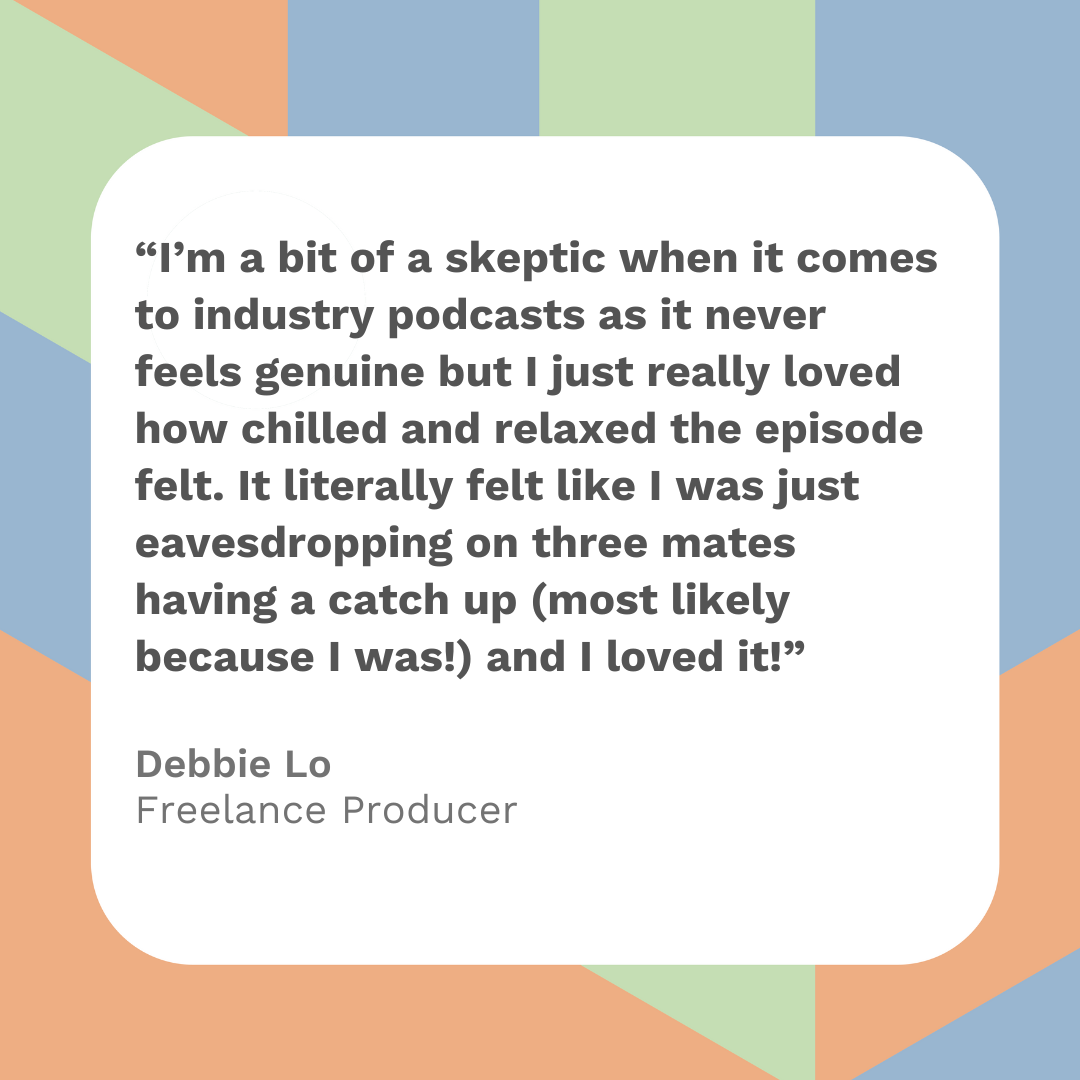
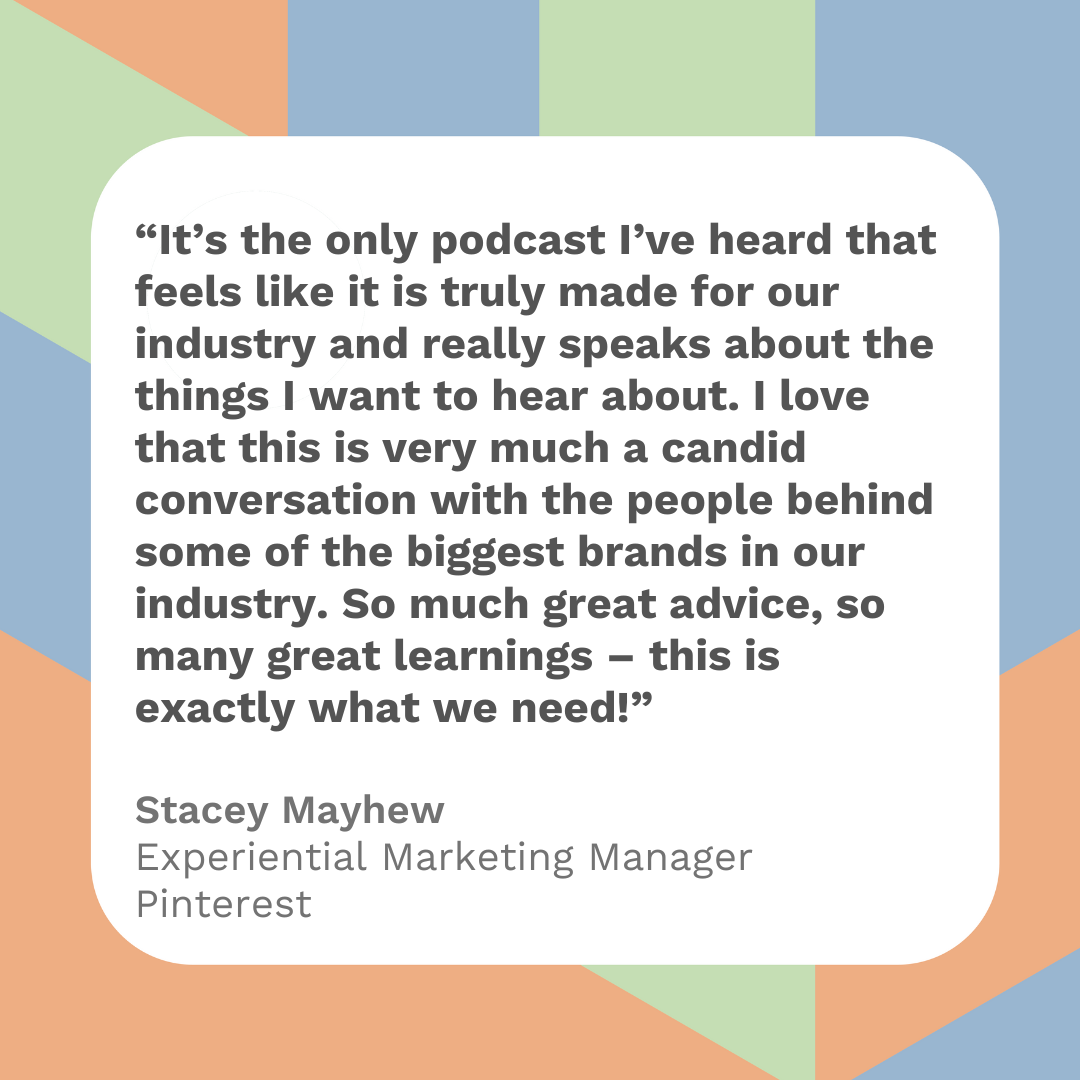
What the industry says about our new podcast…
Our sound and mix engineer is Matteo Magariello and our producer is Peter Kerwood.
About Elevate
Elevate is a pioneering free mentoring programme that has been designed with a specific goal in mind – to inspire, inform and empower people within the event industry.
Elevate operates thanks to the generosity of our Partners; Cvent, Jack Morton Worldwide, Live Union, Powwow Events, Protein STUDIOS (venue partner), PSP, The Production Department and We Are Collider. Our Supporters include; CastleBell Ltd, Trivandi, TRO, Xquisite Productions, SPECIAL SAUCE TRAINING LTD (training partner), Times Ten Coaching, Nic Neal (people and culture partners).
Together, we’re changing lives, careers and the events industry for the better.